
Gemba Walks - Going to See for Yourself
We've learned to map processes, spot waste, and measure what matters. One problem with all those tools? They can keep you at your desk, staring at data and diagrams, while reality unfolds somewhere else.
In this post, you'll learn a powerful—and simple—practice: the Gemba Walk. You’ll undoubtedly notice similarities with “Management by Walking Around” and UX / Usability testing.
What Is the Gemba?
Gemba (sometimes spelled genba) is a Japanese term meaning "the real place"—the actual location where work happens, where value is created, where problems occur.
In manufacturing, the gemba is the factory floor. In healthcare, it's the patient care area. In software development, it's where developers write code. In customer service, it's where agents handle calls. The gemba is wherever your process lives and breathes.
The Gemba Walk is the practice of going to the gemba regularly—not to audit, inspect, or blame, but to observe, learn, and understand.
The Leadership Disease
Here's a common syndrome in organizations: The higher you rise, the further you get from reality.
Leaders sit in conference rooms reviewing PowerPoint slides about problems. Metrics are presented. Root causes are theorized. Solutions are debated. Decisions are made. And often, those decisions are based on incomplete information, filtered through multiple layers, sanitized for executive consumption.
Meanwhile, the people doing the work, the ones closest to the problems, watch these decisions with bewilderment. How many times have we heard (or said ourselves): "If they'd just come ask us, we could have told them what's really happening."
The Gemba Walk solves this problem. It's leadership by presence rather than by presentation.
The Three Principles of Gemba Walks
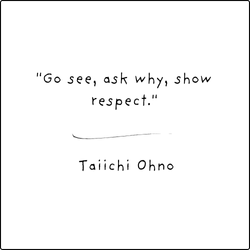
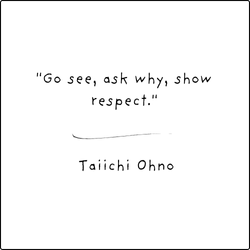
1. Go See
Don't rely on reports, emails, or second-hand accounts and information. Go observe the actual process with your own eyes. Reality is often different from how it's documented or how we imagine it.
2. Ask Why
When you observe something unexpected, ask why (respectfully). Don't assume. Don't jump to conclusions. Seek to understand before seeking to solve.
3. Show Respect
The people doing the work are the experts on that work. Your job isn't to tell them what to do. Your role is to remove obstacles they've identified and support their improvement ideas.
What a Gemba Walk Is NOT
Before we discuss what to do, let's be clear about what not to do:
NOT an inspection or audit - You're not there to find mistakes or assign blame
NOT a tour - You're not a tourist being shown the highlights
NOT problem-solving on the spot - Resist the urge to immediately "fix" things
NOT about you talking - Listen more than you speak (aim for 80% listening, 20% talking)
NOT a one-time event - Effective gemba walks are regular practice, not special occasions
The moment people feel they're being judged or inspected, they'll show you what they think you want to see and the reality will disappear.
How to Conduct an Effective Gemba Walk
Before the Walk:
- Define the purpose - What are we setting out to learn? Which process or area will you observe?
- Schedule appropriately - Go when the work is happening (not during breaks or slow periods)
- Bring minimal entourage - A crowd can intimidate or overwhelm; go alone or with one person
- Leave your solutions at the door - We're there to learn, not to solve (yet)
During the Walk:
- Follow the work - Track one job, one patient, one order from start to finish
- Observe first, ask second - Watch silently for a while before engaging
- Ask open-ended questions:
- "Can you walk me through what you're doing?"
- "What makes this step difficult?"
- "Where do delays typically occur?"
- "What would make your job easier?"
- "What problems did you encounter today?"
- Take notes - Capture observations, not judgments ("I saw three people waiting" not "this is inefficient")
- Look for the 8 wastes - Now that you know them, you'll spot them everywhere
- Notice workarounds - When people create workarounds, there's a problem in the standard process
- Watch the flow - Where does work pile up? Where do people seem rushed? Where do they wait?
After the Walk:
- Thank people for their time - Genuine appreciation matters
- Reflect on what you learned - What surprised you? What confirmed your assumptions? What needs investigation?
- Follow up on issues raised - If someone mentioned a problem, circle back with what you're doing about it
- Share insights appropriately - Report findings without blaming individuals
- Plan next steps - What improvement opportunities emerged?
The Power of Fresh Eyes
Here's something remarkable: even the people who do the work benefit from gemba walks. When you deliberately observe rather than just execute, you see things you've become blind to through familiarity.
That's why cross-functional gemba walks are so valuable. When someone from accounting observes the warehouse, or someone from IT observes customer service, they ask questions that seem obvious to outsiders but are invisible to insiders:
"Why do you enter this information three times?"
"Why are supplies stored so far from where you use them?"
"Why does this require five signatures?"
Sometimes the answer is reasonable and makes sense. Often the answer is "we've always done it that way" or "I don't know."
PRACTICE
Conduct your first gemba walk. Pick a process you're involved in (or curious about). Spend 30-60 minutes observing. Use these questions:
- What value-added activities did you observe?
- What waste did you observe (reference the 8 types)?
- What surprised you?
- What questions emerged that you couldn't answer by observation alone?
- What one change would have the biggest impact?
Write down your observations before doing anything else. The act of documenting forces clarity.
Copyright © 2026 Lean Agility Inc. All rights reserved. Powered by QuickSilk.