
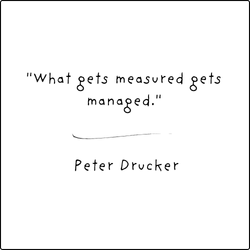
Metrics That Matter
We mapped our process and we’ve found waste everywhere, maybe we even have some ideas about what to do about it. Now we need to decide how we will know if we're improving and that lies in measuring the right things.
The Metric Trap
Organizations are often drowning in data but starving for insight. They measure everything—and understand nothing: metrics, metrics, everywhere, but not a drop to drink.
The problem isn't with measurement itself—it's measuring things that don't connect to customer value or business results. Worse, tracking the wrong metrics drives the wrong behaviors.
Consider the (probably) apocryphal story of the Soviet nail factory, measures become targets, and when the number of nails is measured, the factory output millions of tiny, but useless nails. When the measure was switched to the weight of nails, the workers made one giant, but useless nail. The metric drove the behavior—but neither met the customer need.
Four Types of Measures
We need to understand the four categories of measurement. Each category can tell you something different about your process:
MEASURE TYPE
WHAT IT TELLS YOU
EXAMPLE
WHEN TO USE
Input Measures
Resources going into the process
Number of staff, budget allocated, raw materials available, hours scheduled, equipment capacity
Resource planning; understanding constraints; calculating capacity
Process Measures
How well the process is performing internally
Processing time, error rates, setup time, % Complete and Accurate
Daily management; identifying bottlenecks; detecting problems early
Output Measures
What the process produces
Units produced, orders completed, patients treated, transactions processed, projects finished
Tracking productivity; measuring throughput; understanding volume
Outcome Measures
Impact on customers and business
Customer satisfaction, revenue growth, market share, patient outcomes, on-time delivery, customer retention
Strategic decisions; validating that outputs create value; ROI
1. Input Measures
- What It Tells You: Resources going into the process
- Example: Number of staff, budget allocated, raw materials available, hours scheduled, equipment capacity
- When To Use: Resource planning; understanding constraints; calculating capacity
2. Process Measures
- What It Tells You: How well the process is performing internally
- Example: Processing time, error rates, setup time, % Complete and Accurate
- When To Use: Daily management; identifying bottlenecks; detecting problems early
3. Output Measures
- What It Tells You: What the process produces
- Example: Units produced, orders completed, patients treated, transactions processed, projects finished
- When To Use: Tracking productivity; measuring throughput; understanding volume
4. Outcome Measures
- What It Tells You: Impact on customers and business
- Example: Customer satisfaction, revenue growth, market share, patient outcomes, on-time delivery, customer retention
- When To Use: Strategic decisions; validating that outputs create value; ROI
The Critical Insight: Most organizations obsess over output measures (how much we produced) while ignoring outcome measures (did it matter to customers?). Meanwhile, they neglect process measures (how efficiently we produce) which actually give you the power to improve.
Essential Lean Metrics
Here are some core metrics every Lean practitioner should understand:
1. Metric: Processing Time (PT)
- Definition: The time work is actively being worked on (hands-on time, value-added time)
- Formula/Example: Typically measured in minutes or hours
- Why It Matters: Your baseline for how long work should take if nothing goes wrong
- Measure Type: Process
2. Metric: (Total) Elapsed Time (ET)
- Definition: Total elapsed time from customer request to delivery, including all waiting and delays
- Formula/Example: Typically measured in days or weeks
- Why It Matters: What the customer experiences. The gap between lead time and cycle time reveals wasted waiting time
- Measure Type: Process / Outcome
3. Metric: Process Efficiency / Flow Efficiency
- Definition: The ratio of processing time to elapsed time, expressed as a percentage
- Formula/Example: Efficiency = (Processing Time ÷ Elapsed Time) × 100
- Example: Work takes 2 hours (PT) but requires 5 days to complete (PT = 40 hrs)
- Efficiency = (2 ÷ 40) × 100 = 5%
- Why It Matters: Reveals how much of your lead time is value-added vs. waste. This single metric captures improvement opportunity
- Measure Type: Process
4. Metric: Percentage Complete and Accurate (CA)
- Definition: Percentage of work that passes through without requiring rework or correction
- Formula/Example: %CA = (Units Passing First Time ÷ Total Units) × 100
- Example: 85 of 100 orders correct first time %CA = 85%
- Why It Matters: Low %CA means doing work twice (or more!). Below 90% indicates quality issues, and opportunity for improvement
- Measure Type: Input / Process
5. Metric: Work in Progress (WIP)
- Definition: Number of items currently being worked on but not yet completed
- Formula/Example: Count of items in process
- Why It Matters: High WIP indicates bottlenecks and longer elapsed time. WIP is "trapped" work that hasn't created customer value. Reducing WIP improves flow
- Measure Type: Process
The Golden Rule of Metrics
Here's the most important principle: Measure what matters, not what's easy.
It's tempting to measure what you can count easily—number of reports generated, number of meetings held, hours worked. But none of these tell you whether you're creating value.
Ask yourself: "If this metric improved by 50%, would customers notice? Would they care?" If the answer is no, question whether you should measure it at all.
PRACTICE
Pick one process you're involved in and brainstorm possible metrics (don’t worry for now about the practical considerations of gathering those metrics):
- Make a list of input, process, output and outcome measures of the process.
- List the pros (and cons) from the perspective of incentives and disincentives for each
- Write a compelling rationale for why your top measures should be candidates for metrics and why an improvement in this metric would matter
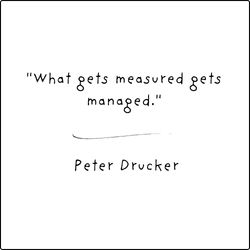
Are you measuring the right thing in your process?
Copyright © 2026 Lean Agility Inc. All rights reserved. Powered by QuickSilk.