
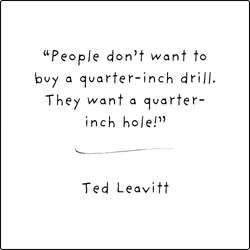
Voice of the Customer - What Does Value Really Mean?
In a previous article we explored how to craft a strong problem statement. But here's another critical question: how do you know which problems are worth solving? The answer lies in understanding the Voice of the Client (VoC).
Two Fatal Assumptions
First, many organizations think they know what their customers want. And second, even when organizations want to understand their customers, clients or end-users, they instead act on what they're directly asked for rather than what clients indirectly imply that they need.
Often, we make decisions based on internal priorities, executive opinions, or what competitors are doing. Meanwhile, clients are trying to tell us exactly what they value—if only we'd listen.
Consider this example: A high-rise property management company surveys tenants about their window cleaning service. Clients consistently prioritize "minimal disruption"—they want cleaning done during off-hours, evenings, or weekends when the building is less occupied.
The company could respond by offering premium off-hours cleaning at higher cost. But this would be solving the symptom, not the underlying need.
The real client need isn't "no disruption from window cleaning"—it's "clean windows without disruption." The Voice of the Client helps us discover the actual value statement: windows that stay clean without requiring frequent intervention.
This insight led Pilkington Glass to develop self-cleaning glass technology. Instead of optimizing the service delivery schedule, they eliminated the need for the service entirely. That's the difference between listening to what customers say they want versus understanding what they actually value.
The VoC Lesson: When clients request a specific solution ("clean during off-hours"), ask why. What's the underlying need? Often the best answer isn't an improved version of the current process—it's a completely different approach that delivers the true value clients seek.
Here's an insightful take on VOC that increased McDonald’s milkshake sales by 400%.
Value: The Only Thing That Matters
In Lean, we define value as any activity that the client is willing to pay for. Everything else is waste.
But there's a catch: value is defined by the client, not the producer. It doesn't matter how proud we are of our seven-layer approval process or our beautiful color-coded filing system. If it doesn't create value from the client's perspective, it's waste.
The Three Types of Activities:
- Value-Added (VA) - Activities that transform the product/service in ways the client cares about and will pay for
- Example: A surgeon performing the actual procedure
- Business-Value-Added (BVA) - Activities the client won't pay for but are required (regulatory, safety, etc.) for the organization’s operation
- Example: Sterilizing surgical equipment (client won't pay extra for it, but it's absolutely necessary)
- Non-Value-Added (NVA) - Pure waste from the client's perspective
- Example: Waiting for approvals, redoing work due to errors, searching for information
Most processes are shocking: as little as 5% of effort expended on Value Added Activities. That means roughly 95% of what we do every day creates zero value from the perspective of clients.
How to Capture the Voice of the Customer / Client and what you should do with it – 4 Easy Steps
1. Identify Your Clients
You might have multiple client types:
- External clients - Those who buy/use your final product or service
- Internal clients - The next person in your process who receives your work
- End users - Those who ultimately benefit (sometimes different from the buyer)
Each may define value differently. A hospital patient values short wait times and clear communication. The insurance company paying the bill values efficiency and cost control. Both are customers/clients.
2. Ask the Right Questions
Don't ask: "Are you satisfied with our service?" Ask: "What takes too long?" "Where do we create frustration?" "If you could change one thing, what would it be?"
The first question gets you a polite "sure." The second identifies actionable insights.
3. Observe / Record Actual Behavior
What clients say they want and what they actually do are often different. Watch how they use your product or service. Where do they struggle? Where do they create workarounds?
4. Translate Needs into Requirements
Client voice: "I need this faster" Your requirement: Reduce turnaround time from 5 days to 2 days
Client voice: "It's confusing" Your requirement: Reduce steps from 12 to 6, eliminate jargon in instructions
From Voice of Client to Problem Statement
Here's where the previous post on problem statements connects: A strong problem statement is rooted in client value.
See the difference? The strong version connects internal processes to external impact. When we cover measurement in a future unit, we'll see that connection again between outputs and outcomes.
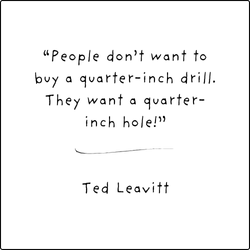
An insightful take on the importance of the Voice of the Customer from Clay Christenson. The "Job to be Done" theory.
PRACTICE
Pick one process you're involved in. Identify who your customer is (internal or external). Then ask them: "What takes too long?" or "Where do we create extra work for you?" Listen to the answer without defending or explaining. Just listen.
You might be surprised by what you hear.
Copyright © 2026 Lean Agility Inc. All rights reserved. Powered by QuickSilk.